Showing posts with label Nuclear. Show all posts

Friday, 8 May 2020

Greens Go Nuclear?

Yesterday during an interview with Pat Kenny, Green Party leader Eamon Ryan, said he was not opposed to importing nuclear energy. He made the very valid point that "you can't differentiate one electron from the other". But this begs the question, why the obsession with renewable targets, when in reality it's not possible to separate an electron that came from coal with one that came from wind. Given that a certain amount of baseload conventional plant will always be required to keep the electricity system operating, so that electrons can flow at all, is it reasonable to state on your electricity bill that X amount of your electricity came from X sources?

As for nuclear energy , how can a politician advocate importing nuclear energy while at the same time opposing the building of a nuclear power station in Ireland? 

He also admitted he doesn't drive an electric car, instead he drives an old diesel. 

Ryan has obviously not thought through his beliefs, he has an a la carte approach to his philosophy, which requires much more scrutiny before he once again enters government. Pat Kenny is one of those rare interviewers left in Ireland who is capable of doing just that.

Link to interview here, the part about nuclear is at 13 minutes, the part about not driving an electric car is towards the end :

Sunday, 10 February 2019

Switzerland and Sweden Used as Models for Irish Carbon Tax


A Benchmark for the Carbon Tax, no Benchmark for cheap electricity  

As part of a comprehensive policy package, carbon taxes will have a central role in guiding the energy transition by providing the economic incentive to switch from high-carbon to low- or zero-carbon technologies and products. In Ireland, the Climate Change Advisory Council has recommended a phased increase in the carbon tax from the current €20 per tonne to €80 per tonne by 2030. In terms of benchmarking, it is worth noting that some countries already have carbon taxes at the upper end or even in excess of this range, with the Swedish carbon tax currently at $139 (e112) and Switzerland at $101 (e81).

The Central Bank have now thrown their weight behind the sudden political push for an increase of the carbon tax in Ireland. Their recent report about climate change and it's alleged impacts on the economy fail to address the issue of the unsustainable levels of government and private debt in Ireland, which allow us to live far beyond our means and consume resources at a far greater rate than previous generations. There is no mention of unsustainable government spending and the bloated welfare state (The cost for a new hospital in Dublin has risen from €400m to nearly €2bn, welfare spending still stands at €20bn despite lowest unemployment for over a decade).

The Central Bank fails to understand that emissions are coupled with economic growth so that if climate change were really having an impact on the economy, we would be seeing economic decline right now, followed by a consequent reduction in emissions. They make the observation that 1991-2016 temperatures were higher than the period for 1960-1990, which actually supports the natural cyclical theory of climate change rather than the man made theory.  They also claim that insurance payouts due to extreme weather events are up. The 1940s were perhaps the worst decade for flooding and crop devastation in recent history but I can find no evidence that there were any insurance payouts at all. But I want to focus on one particular part of their report, the carbon tax. 

The purpose of the Central Bank presentation on climate change appears to be to groom Irish people for more taxes, specifically carbon taxes. 

They present Sweden and Switzerland as models for Ireland to follow in this regard.  What they fail to state is that Sweden has electricity prices at least 25% less than Ireland. But more importantly, Switzerland, which has a carbon tax equal to that proposed by Irish politicians, has had one of the lowest electricity prices in the world for many years, roughly half that of Ireland, which now ranks as one of the most expensive countries for electricity in the world.  Switzerland generates most of it's electricity from hydro and nuclear (as does Sweden). How is it that Ireland's indigenous wind industry cannot compete with Swiss hydro, an indigenous renewable source that does not lead to high Swiss electricity bills ?

The examples of Sweden and Switzerland actually undermine the central banks case for more carbon taxes in Ireland as it shows that we are already paying comparatively much higher for energy. A carbon tax similar to what was introduced into these countries could make Ireland the most uncompetitive country in the world for energy with actual knock on impacts for our economy far worse than "climate change". 

One could have perhaps made a better case for the carbon tax if wind energy had led to the cheap energy revolution that Irish people were promised.  But as we all know that never materialized.


https://ec.europa.eu/eurostat/web/products-eurostat-news/-/DDN-20180807-1


Saturday, 25 November 2017

China Energy In Numbers - Part One

This will be a series of short posts which I hope will put the energy revolution in China in perspective.

With Irish media outlets like state broadcaster RTE constantly pushing the narrative that China will be a renewables powerhouse within a couple of decades, I hope this series of posts will act as a counter balance to this type of propaganda.

China’s most recent Five-Year Plan has set a target for an additional 58 GW of nuclear capacity by 2020. 

This capacity will provide enough power equivalent to the average demand of the entire French grid on a typical winter's day.


-US Energy Agency

Monday, 24 October 2016

Cold Winter Could Spell Disaster for EU's energy policy


There are significant signs that a cold winter is on the way for Northern Europe. The Polar Vortex is notably very weak for this time of the year. This means a weak jetstream, eastern winds and a cold winter. During the previous two winters we had a strong jetstream and strong westerlies, which explains why they were so mild. The Polar Vortex looked very different at this time of the year to what it looks like now i.e. much stronger. While Europe had mild winters, America had cold severe winters :

http://www.independent.co.uk/news/world/americas/niagara-falls-freezes-incredible-pictures-show-falls-partially-frozen-as-polar-vortex-is-set-hit-us-10055691.html

Coupled with the current weak Polar Vortex is a projected negative Atlantic Oscillation. There were also signs of a cold winter back in August when heavy snow fell in Germany to an extent not seen since 2009.

The problem for Europe in the event of a severe winter is inadequate generation capacity. France will be shutting down five of its nuclear reactors over the coming months.  This creates a big problem because other countries that have invested heavily in renewables are dependent on French imports. 

Comparing the French grid for October 2016 Vs October 2015 shows up a change in imports / exports profile :


You can see that last year, France was exporting large amounts of power whereas this year it is exporting much less and indeed importing half of the time. Belgium has also been having problems with their nuclear fleet recently. Spain which was importing up to 2GW this time last year is now exporting most of the time. Germany are also full time net exporters. This can change if output from renewables declines in these countries.

A cold winter accompanied by high pressure and low winds will put the Energy Union to the ultimate test. 

Monday, 1 August 2016

Hinkley Point


I've written previously about the economics of electricity generation here. 

The Hinkley Point debacle has confirmed my analysis. Modern power stations have become uneconomical to run, investors demand large subsidies as incentive to build them, governments have to keep the lights on while satisfying the ever increasing demands of the greens and their cohorts in the renewable unreliable energy industry.

It can only end in disaster, unless that is, Greg Clark and Theresa May can bring normality back to the post Brexit UK energy market. 

They will need to move quicker on the Article 50 button before the lights go out.  

Tuesday, 16 February 2016

Trinity engineer raising €10m for nuclear power technology

Interesting technology but as far as Im aware it was known about in the 1950s but not pursued at the time in America. At 150MW capacity, they would be fine replacements for our outdated peat power stations.


Article originally published in the Sunday Independent, written by John Reynolds


A Trinity College engineering graduate, who was named in this year's Forbes Europe Top 30 under-30 list, is raising €10m to develop a nuclear power technology that he and his partners claim could produce electricity more safely. It would also do so more cheaply than a new coal-fired power station or the latest nuclear one that Britain plans to build at a cost of up to €32bn, they say.


Founder of Energy Process Developments Rory O'Sullivan, 29, who has begun talking to a number of prospective Irish investors about the project, has partnered with British Moltex Energy founders environmentalist John Durham and scientist Dr Ian Scott, an entrepreneur and former chief scientist at consumer goods giant Unilever.
Cambridge-educated Dr Scott made a breakthrough in establishing that because of its design and how it works, by containing molten salt nuclear fuel in tubes, rather than hazardously pumping it around pipes, valves and heat exchangers outside a reactor, his stable salt reactor method, which keeps the fuel locked up in closed tubes, is far safer.
It also avoids the requirement for as much highly specialised, expensive and failsafe systems for cooling, containment and safety control, which raise new nuclear costs to levels that leave electricity billpayers and governments on the hook for tens of billions.
"We aim to win a slice of £250m funding the UK government has made available and have also established partners in Asia to develop the technology there. But we need further investment now to ensure we can take the lead internationally. Today's clean power technologies will not reduce global energy poverty at today's costs. Drastic cost reductions are required to implement clean power on a mammoth scale," O'Sullivan said.
Nuclear power is currently illegal here, but he added that the Moltex design could be used here in modular units that each generate about 150MW of power - enough for about 45,000 homes, potentially within the next 10 years.

Tuesday, 15 December 2015

Astronomy Ireland Lecture: The Search for Other Life in the Universe and Why Fermi asked the wrong question


A bit of a diversion on Irish Energy Blog to a physics/astronomy topic that's quite popular now - Exoplanets and the search for ET life. Astronomy Ireland held an excellent lecture in Trinity College last night which was given by Dr Duncan Forgan. Its quite exciting to hear about the new telescopes that will be launched in the coming years as successors to Hubble and the new techniques that are been used to find life in the universe. However, the question as to why we still haven't made contact with life out there is still puzzling physicists.

It was Italian physicist Enrico Fermi who first put the search for life into context by asking the simple question "Where is Everybody?". If there are billions of stars in the galaxy, and some of these stars are billions of years older than the Sun, then alien life should have arrived at Earth by now, given that it should only take them about 10 million years to travel across the galaxy.  This became known as Fermi's Paradox.
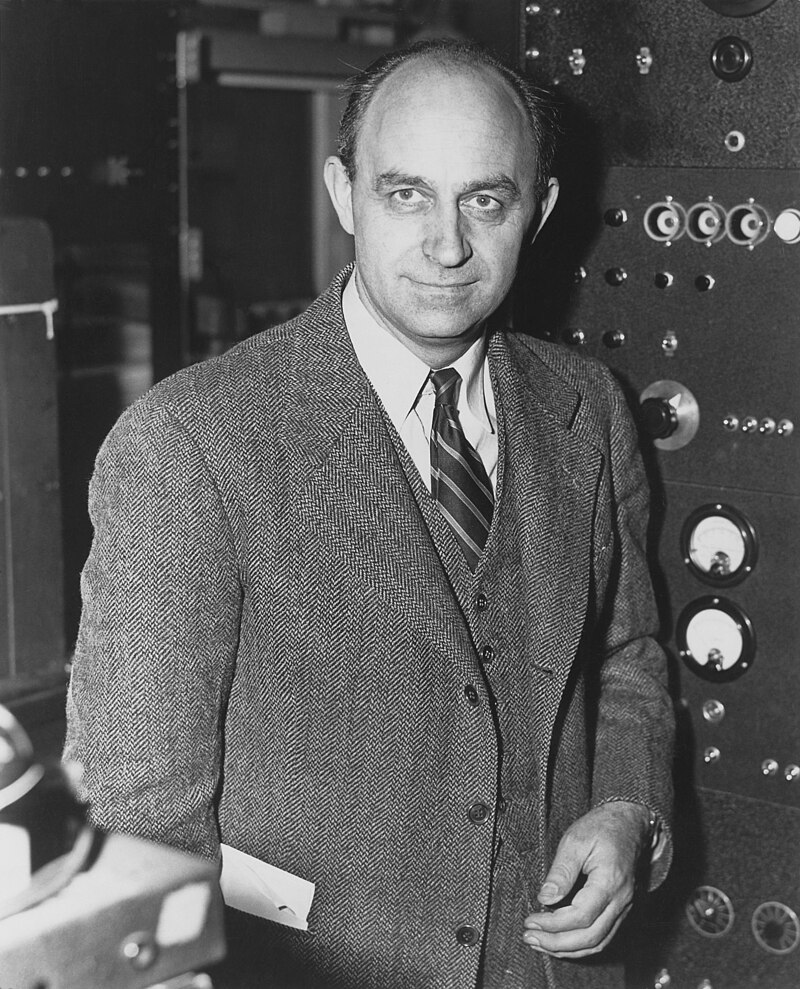


Why Fermi asked the wrong question


There are various theories which attempt to answer Fermi's Paradox which Dr Forgan explained but it seems to me that a different question needs to be asked.

If we consider how our own relatively advanced civilization came about, it was the discovery of fossil fuels that allowed us to "get off the land" and "into space". Fossil fuels had such high Energy Return on Investment (EROI), due to the energy intensity contained in them, that they allowed humans to get relatively easy access to huge levels of energy enabling us to move away from a largely agricultural based society and build the modern society which you see around you and eventually rockets and spacecraft. The problem is that the Fossil Fuel era is only a short blip in the Earth's history and indeed mankind's lifespan. The only reliable alternative to fossil fuels is nuclear power and indeed it even has a higher EROI than fossil fuels (see here). However, discovering nuclear power is by no means a certainty for any intelligent life (as opposed to discovering coal or gas) but we did it - and guess who was the architect behind it, none other than Enrico Fermi (pictured above). Note that the ESA used solar power to power their spacecraft to nearby comets but NASA used nuclear power to send spacecraft to Pluto and beyond the Solar System. When fossil fuels eventually run out (or become too uneconomical to drill for) nuclear power will be the main energy source for future civilizations until they can come up with another alternative when that runs out. But that is by no means certain either and who knows, the human race may eventually return to the pre-industrial age. Should this happen the modern advanced civilization that we know (and will know) will be simply a blip in man's history. And a very tiny footnote in Earth's history.

So where does this leave us ? Well, given the number of stars and planets in the universe, its an impossibility that we are alone as Fermi pointed out. But communicating to and receiving communication from other life out there depends completely on the stage of evolution of the other life, which depends on the quantity of fossil fuels available to them, and indeed whether they have discovered nuclear power or something similar that can allow their advanced civilization survive after fossil fuel stocks have been depleted on their own planet. This period of advanced alien life is likely to be just a blip on most of the habitable planets in our galaxy. Perhaps only a tiny few can extend well beyond their "fossil fuel age", if any at all.

So this then narrows down the number of habitable planets to those planets that currently hold advanced intelligent life. There may have been million of these planets in the past and there may be many more million in the future long after the human race have returned to the pre-industrial age or indeed become extinct. But they need to be on the same timeframe as us for us to make contact with them or vice versa. Imagine an alien life sending radio signals during the Renaissance - they would have unfortunately fallen on dead ears. "Sorry, I missed your call" on an intergalactic scale !

There is also the added problem of the time difference given the huge distances between us and habitable planets. I think a distance of 1 million light years equates to 1 year time difference. So, say an alien life is sending radio signals at a distance of 100 million light years away. This would reach us 100 years later at which point they may be unable to receive a return signal from us which would reach them another 100 years hence.

Therefore, the question we should be asking is not "Where is Everybody?" but "When is Everybody?"

Friday, 13 November 2015

Review of Switch (2012 film)

Recycling of nuclear waste in France now means that waste materials are relatively small - above is an
example of one such waste storage facility in France.


Last night I attended a screening of Switch, directed by Harry Lynch and featuring US Geologist Scott Tinker. It gave a quite unexpected, but welcome, balanced view on the future for energy.

I was a bit disappointed when a speaker told us before the screening that we were reliant on Putin for our gas needs - in fact, we import our gas from Norway. And how been 95% reliant on imports was a bad thing - nobody seemed to have told him we import 100% of our cars. But anyway, back to the film.

First of all, the negatives. It failed to deal with losses in efficiency. It mentioned the need for fast acting gas plant to back up intermittent renewables but failed to mention the loss in efficiency as a result of countries moving away from CCGT and towards less efficient OCGT. Thereby, increasing emissions and fuel consumption from the gas power generation sector.

Likewise, with electric vehicles, power stations are less efficient than regular petrol engines at converting oil to mechanical energy so you end up burning more fuel.

The film also gave the fairly standard view of Denmark as a renewables success, albeit with some qualifications. We were told that Denmark's wind exports were a valuable commodity when in fact, as Irish Energy Blog has shown, the export prices there are next to nil. There was also no mention of the high electricity prices in Denmark.

On the plus side, the film showed us the inside of a nuclear plant. It was not so nasty after all with radiation levels inside the plant lower than outside.  The amount of nuclear waste per person in France was the size of a 20 cent coin and recycling of the fuel meant that only a tiny proportion of the waste had to be dumped. The entry fee to see the film was worth it for this part of the film alone. It also dispelled alot of the myths around fracking - no contamination of water had been found in America (although we were later told afterwards that Ireland's geology was different to America's).

The film also explained very well the volumes of energy involved in powering the modern world and the small amount of energy that intermittent renewables, like wind and solar, could contribute to this in reality.

The film finishes on the topic of energy efficiency and the importance of conserving energy and demand side solutions rather than investing in more electricity generation (as the Irish government are committed to doing).


Monday, 5 October 2015

Professor Richard Dawkins says wind turbines are not the solution to energy problems


For a while, I thought most scientists had lost the run of themselves and got carried away with green fairy tales but thankfully Richard Dawkins has shown he is still in full possession of his intellectual faculties.


Nuclear energy is one of the great inventions of science and Professor Dawkins clearly sees that the future is nuclear :


Saturday, 3 October 2015

Nuclear Energy - A Way Forward For Ireland ?

The following blog post was written by a power generation engineer with extensive Europe-wide experience in all types of generation.


France, Cattenom (Kattenhofen) - the nuclear power plant Cattenom consists of four pressurized water reactors. Operator is the French company EDF
Steam rises from a Pressurized Water Nuclear Reactor in Cattenom, France

2015 was the year the Irish Central Bank commemorated Prof. Ernest Walton’s (Ireland’s only Nobel Laureate in the science arena) contribution to Nuclear Physics by splitting the atom in the 1930s. Nuclear medicine is now an essential part of our everyday life from simple x-rays to advanced CT and PET scans. Yet in 2015 the words ‘nuclear power’ are still surrounded by fear and hysteria in Ireland.


Irish Political Hypocrisy and Nuclear Power

Irish politicians run a mile from the topic, shouting for the closure of Sellafield, yet happy to import nuclear power via interconnectors and planning another one to import more from France. Eamon Ryan (RTE’s favourite energy analyst) says he wants to debate the topic yet refused uranium exploration licenses back in 2007 as it could be used for future nuclear power electricity generation. For someone so concerned with Climate Change, Ryan must be well aware that in the International Energy Agency’s 2 Degree Scenario (2DS), requires the global installed capacity of nuclear power to more than double from current levels of 396 gigawatts (GW) to reach 930 GW in 2050.

Nuclear Power is Unconstitutional

One of the myths often trotted out is that nuclear power is prohibited in Ireland under the constitution and would need a referendum to change it. In fact it’s so much easier. Only the recent Planning and Development (Strategic Infrastructure) Act 2006 and the Electricity Regulation Act 1999, both of which can be changed by a simple vote in the Oireachtas, prohibit it. Does anyone recall the debate or public vote to ban nuclear in 1999 or 2006?


We don’t have the skills in Ireland

Ireland is a leader in the high tech pharmaceutical and semiconductor industry. Irish companies are now exporting their professional services in these areas across the globe. ESBI have been designing and building power plants overseas for decades. Irish engineers have worked at senior levels in the nuclear industry from operations to decommissioning and are highly regarded and sought after.  You can be sure that many more will succeed in building the next generation of reactors in Britain.
 

It costs too much

Yes nuclear power has high upfront costs but it has an inexpensive and stable fuel supply.  Study after study shows it’s the most economic form of electricity generation (even compared to the one fueled by ‘free wind’).  Ever wonder why France has such low electricity costs compared to Ireland and Denmark?

How nuclear energy could work in Ireland 

Nuclear provides baseload, dispatchable power which means it provides energy at the flick of a switch. The Irish renewable industry have not come up with a reliable means of providing baseload generation. Most of them seem to be not in favor of biomass, which could potentially work as a source of baseload power. This leaves only one low carbon alternative - nuclear. One can see in France the effect the transition to nuclear has had on carbon emissions :


Graph taken from Euan Mearns Energy Matters website
France mainly uses Pressurized Water Reactors (PWRs) which have a capacity of about 900MW. Moneypoint coal power station in Co.Clare has an almost identical generation capacity. Therefore, this type of nuclear reactor would be perfect as a low carbon replacement for Moneypoint. Given that Moneypoint runs in the Irish grid twenty four hours, 365 days a year, this would significantly reduce Ireland's emissions without the need to build extra grids. One would have to install 7,500MW of wind and associated transmission lines to achieve anywhere near the same fuel and emissions savings (based on a capacity credit of 12%)¹.


The future

The rest of the world has moved forward and the construction of new nuclear power plants is at its highest level in 25 years. The renewables project in Ireland has not succeeded. It is only a matter of time before politicians begin to prepare for a massive U-turn.


¹In theory yes, but in practice, given the system constraints, it would still be unlikely to achieve the same savings with any amount of wind.

Friday, 25 September 2015

Windless nights and cold seas


Windless Nights


Tonight, wind energy in Ireland is at 21MW, a capacity factor of 0.8% :


England is not doing much better with 420MW, a capacity factor of 3% :


But surely, if we had an interconnector to France we could import wind from there ?

Well the problem is there is not much wind blowing there either. Interestingly, they have more wind energy than Ireland has with 1,854MW and a capacity factor of 18.5%. So much for the idea that Ireland has the best wind speeds in Europe :


But this is only 3% of electricity demand in France which means they don't have any surplus wind energy to export to anybody. 

Nuclear power is providing 75% of their electricity demand so if we had an interconnector to France we would be importing mostly nuclear power (we currently import nuclear power from the UK). But oddly enough, there is still a superstitious fear of nuclear power in Ireland, although we are happy to import it from other countries.

Total wind capacity for the three countries is 25GW, at let's say, an average cost of €1 million per MW. This means that € 25 billion worth of energy infrastructure is producing just 9% of its rated output, contributing a grand total of 2% of total electricity demand (at 104GW) for these nations. This is what happens when Governments run loose with their people's money and bypass the legal assessments that could have prevented this waste of money. 

The EU's single currency has failed, their Schengen Agreement has failed, and their plans for an energy union based on intermittent renewables is failing. It is time for a re-think.
 

Cold Seas


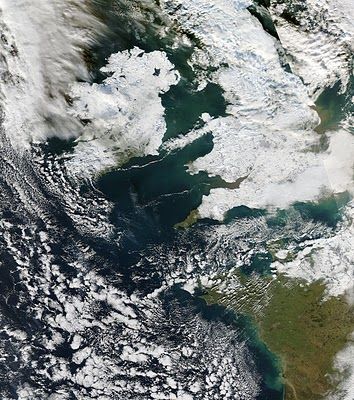
There is currently a very cold body of water in the Atlantic around Ireland :


If we compare this to 2010, one of the coldest winters in recent history, the seas were much warmer back then at this time of the year :


It seems a good possibility that we are in store for a very cold winter with low winds. 

Things could get interesting.

Friday, 23 January 2015

Wind Energy a wasteful use of resources (EROI)


The Energy Return on Investment (EROI) measures the energy output given by a certain power supply technique over its lifetime relative to the energy required to extract the fuel and build the power station to provide that same power supply. Recent research into the German energy system reveals the EROI for different types of power supply based on the most detailed study yet into the area :


They first of all calculated the unbuffered EROI for each power supply, which does not include storage systems. They then calculated the buffered EROIs, taking into account pumped storage which is required to balance wind power, so that like to like comparisons can be made with other power plants. 

The results show that nuclear and hydro come out best with coal and CCGT (gas) on respectable positions. Renewables in general dont come out too well. Solar CSP, which are built in deserts, comes out the best. As for wind, when you add in all the concrete, steel, water, magnet processing and oil that goes into their manufacture, installation and maintenance, you get a relatively small amount of energy back over the turbine's lifetime :


The lifetime of wind turbines


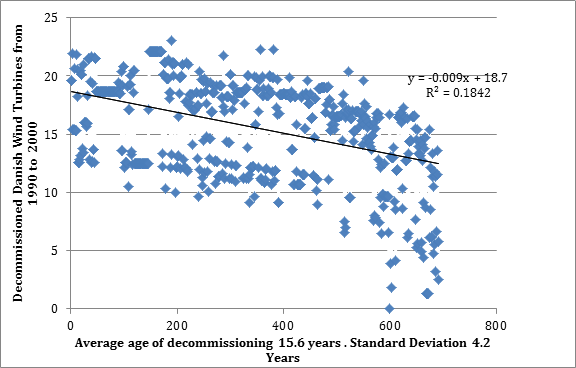
One could argue that the EROI for wind may be slightly higher in Ireland with the slightly higher wind speeds over Germany. However, a lifetime of 20 years was assumed in this study. The lifetime of wind turbines, in particular the larger ones, is now been questioned as the experience in Denmark shows that turbines installed between 1990 and 2000 lasted on average for 15 years [Figure 1].


Figure 2: Decommissioned Danish Wind Turbines from 1990 to 2000. (Graph provided by John Dooley based on data from Danish Energy Agency)


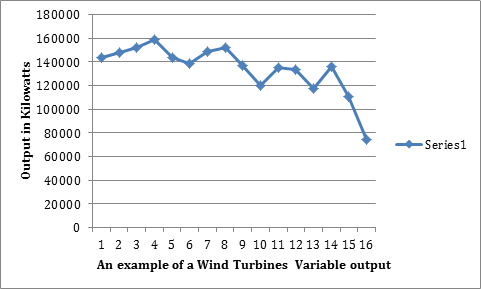
Figure 3: Example of wind turbines variable output (Graph provided by John Dooley based on data from Danish Energy Agency)

And Figure 3 shows how a wind turbines output is not consistent over its lifetime. In fact, the output deteriorates on average at around year 10. So the EROI of wind would be even worse if the above factors had been taken into account in the analysis.

The importance of EROI

So why is the EROI important ? Well, one needs to put it into context. Our modern society evolved around the use of coal and later oil as sources of energy. Our present society would be unimaginable without them. The fallacy thrown around by wind lobbyists (and that of many other renewables) is that wind energy is comparable with fossil fuels. You can't build a modern grid from the bottom up with wind energy. Just ask our 18th and 19th Century ancestors. But you can build a modern grid around fossil fuels and then integrate other less reliable sources into it, but always at an additional cost to the consumer. The fossil fuel plants still have to kept running and open for business.

As Charles A.S. Hall explains :
The importance of EROI is far more than simply whether it is positive or negative. Several of the participants in the current debate about corn-derived ethanol believe that corn-based ethanol has an EROI of less than 1:1, while others argue that ethanol from corn shows a clear energy surplus, with from 1.2 to 1.6 units of energy delivered for each unit invested. But this argument misses a very important issue. Think of a society dependent upon one resource: oil. If the EROI for this oil was 1.1:1 then one could pump the oil out of the ground and look at it and that’s it. It would be an energy loss to do anything else with it. If it were 1.2:1 you could refine it into diesel fuel, and at 1.3:1you could distribute it to where you want to use it. If you actually want to run a truck with it, you must have an EROI ratio of at least 3:1 (at the wellhead) to build and maintain the truck, as well as the necessary roads and bridges (including depreciation). If additionally you wanted to put something in the truck and deliver it, that would require an EROI of, say, 5:1.


Now say you wanted to include depreciation on the oil field worker, the refinery worker, the truck driver, and the farmer; you would need an EROI of 7:1 or 8:1. If their children were to be educated you would need perhaps 9:1 or 10:1, to have health care 12:1, to have arts in their lives maybe 14:1, and so on. Obviously to have a modern civilization one needs not just surplus energy, but lots of it—and that requires either a high EROI or a massive source of moderate-EROI fuels. If these are not available, the remaining
low-EROI energy will be prioritized for growing food and supporting families.

And to get to the stage where activist groups like Greenpeace can fly a bunch of unemployed people to Lima on a jet plane to desecrate an ancient structure in a protest against fossil fuels, you probably need something like an EROI of 20:1. And that's the trouble with fuel sources with such high EROI - it leads to large levels of waste. And the plans for large scale wind farms, storage units, pylons and interconnectors (all require significant use of fossil fuels and rare earths) are now becoming just that - wasteful projects.

What the green organisations don't tell you is that if their plans come to fruition, and oil and coal is kept in the ground, some very tough choices will need to be made about division of resources. Of course green (and most of their left wing supporters) groups usually don't concern themselves with "the law of unintended consequences" :
If the energy and hence economic pie is no longer getting larger—indeed, if because of geological constraintsit can no longer get larger—how will we slice it? This may force some ugly debates back into the public vision.If EROI continues to decline then it will cut increasingly into discretionary spending (the engine for economic growth) and we will need to ask some very hard questions about how we should spend our money.
A problem with substitutes to fossil fuels is that, of the alternatives currently available, none appear to have all the desirable traits of fossil fuels, especially liquids.These include sufficient energy density, easy transport-ability, relatively low environmental impact per net unit delivered to society, relatively high EROI, and availability on a scale that society presently demands. Thus it would seem that the United States and the rest of theworld are likely facing a decline in both the quantity and EROI of its principal fuels. How we adjust to this will be a critical determinant of our future.


Google engineers, once very pro-renewables, are only now beginning to realize the folly of investing large amounts of money and resources into renewables (full article here) :

At the start...we had shared the attitude of many stalwart environmentalists: We felt that with steady improvements to today’s renewable energy technologies, our society could stave off catastrophic climate change. We now know that to be a false hope ...Renewable energy technologies simply won’t work; we need a fundamentally different approach.
So the question is how long will it take for governments to realize their mistake or will they carry on spending citizen's money on wasteful projects ? It is estimated that 500 billion dollars has been invested in capital costs alone in European renewable projects - a lot of money that could have been invested in genuine environmental causes, education and health.

Based on this US comparative pricing, the major Nations in Europe have expended of the order of about $0.5trillion on Renewable Energy installations to generate an amount of electrical energy that could have been provided by conventional sources for about 16th of the capital cost. This 16th of the cost also represents an estimate of the approximate cost of the spinning reserve needed to support the Renewable Energy Technologies as they are intermittent and non-dispatchable (link) .