Showing posts with label fossil fuels. Show all posts

Saturday, 16 May 2020

Covid-19 Crisis highlights dependency on Fossil Fuels

Delusional Statements in Media made about Climate Change and Coronavirus Crisis


You may have read some puzzling statements in the media recently along the lines of "we must ensure the economic recovery from Covid-19 tackles climate change" or depressing pleas like "we must not forget the even bigger crisis we face - climate change". 

The harsh reality for the climate hysteria movement is that the majority of (PPE) personal protection equipment that have being used during the coronavirus pandemic are made from hydrocarbons, i.e. petroleum based products.

Disposable gloves are made from either nitrile, vinyl or latex. The first two are made from ethylene, propylene and PVC (polyvinyl chloride), all of which are manufactured from materials extracted during the petroleum refinery process.  Latex gloves are made from natural rubber but of course that must be shipped from Malaysia using, what else, but diesel to fuel the ships.

The most popular face masks are the blue polypropylene masks. Polypropylene is manufactured using propene. Propene is produced from fossil fuels, mainly crude oil but in recent years China has used gasified coal. Propene is the second most important product used in the petrochemical industry, after ethene (which is used in PVC production).   

Then there is the issue around food hygiene. There will be increased pressure on shops to cover all food in the wake of the Covid-19 crisis. Plastic, produced from the distillation of crude oil, is of course the most popular cover used. 

So, the Covid-19 crisis only highlights the dependency we have on fossil fuels. Attempting to link climate change to the enormous challenge posed by the Covid-19 crisis is delusional given the worldwide dependency on oil in fighting the virus from masks and gloves to the transport needed to transport them and other necessities like food around . 

But if they really wanted to reduce emissions anyway, they would have to bring all that manufacturing back to Europe and produce everything we need here. 

Sunday, 19 April 2020

EU Fossil Fuel Imports have Increased

Surprise, Surprise - The Renewables Program has Failed

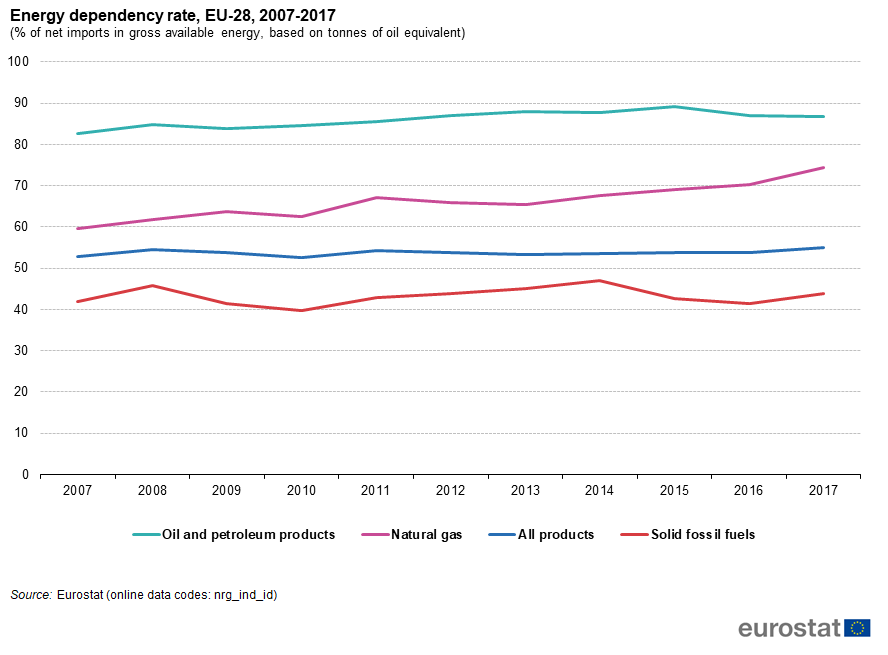
One might expect that after installing all this renewable energy, that European Union countries would be importing less fuel. But the failure of their ideologically driven energy policies can now be understood by this simple graph. Gas imports are well up, and even oil and coal are slightly higher as compared to 2007. If the ultimate goal is to "divest" from fossil fuels , then we have got no further on. Perhaps it's time to do a proper cost benefit analysis before we go any further?


Thursday, 2 April 2020

Back to Fossil Fuels


One third of Ireland's exports is Medical and pharmaceutical products but yet we are still reliant on China for medical supplies during the coronavirus crisis. Coal obsessed China. 

During the crisis, the obsession with renewables has being dispensed with and we are now as a nation happy to use fossil fuels guilt free again. 


Cargo ships are keeping the nation fed during the crisis. 


How are cargo ships fueled ?  Heavy fuel oil and marine diesel oil.

And equally important are the diesel fueled lorries going up and down the motorways.  

When the chips are down in a crisis like we are now in, reliable energy sources are essential. It's just a fact that fossil fuels are the only option that meets that requirement right now. If Extinction Rebellion got their way, the deaths from coronavirus would be much greater.


Monday, 23 September 2019

ESB Profits show that Wind Energy has not Reduced Reliance on Fossil Fuels

ESB operate most of the fossil fuel powered generators in Ireland. Their gas, peat and coal generating plants amount to about 3,400 MW. Hydro about 400MW and wind about 450MW. So about 80% of their generation is from fossil fuel sources.

Given that Ireland now has in total about 3,500MW of wind, we should, if the wind energy supporters are right, see wind energy eroding profits in ESB generation.

But their latest results show that their Generation and Trading business has increased it's profits by    € 26 million to € 70 million. Although there was lower running in Moneypoint, this was more than offset by a higher margin in gas plants. 

A breakdown of this profit is not given, but we can safely assume that most of it came from fossil fuel generation since that comprises 80% of their business as I have shown above. It is indicative that during the same period, there was an impairment charge (i.e. a write down) of €1.8 million for a wind farm.

So almost a decade on from Ireland's Renewable Energy Action Plan which stated that :

Renewable energy reduces dependence on fossil fuels, improves security of supply, and reduces greenhouse gas emissions creating environmental benefits while delivering green jobs to the economy, thus contributing to national competitiveness. 

 we can now see that wind energy does not reduce dependence on fossil fuels, rather, it maintains dependence on it.

Wednesday, 26 December 2018

Ireland Exporting Fossil Fuel Power


According to Eirgrid's East West Interconnector brochure, one of the benefits of the interconnector to UK is that it "facilitates growth in renewable energy".  What is not often mentioned is that sometimes we in Ireland are actually exporting fossil fuel power through the interconnector. During the recent summer, when there was little or no wind, the interconnector was doing just this most of the time -  exporting fossil fuel electricity generated in Ireland to the UK :
The period of low wind this summer


https://www.gridwatch.templar.co.uk/


Because of EU emission rules, the carbon emissions for these exports will be counted in Ireland, the country of origin, which will benefit UK with emission free electricity. 


Sunday, 23 September 2018

Carbon Emissions and Country of Origin

An interesting point made about country of origin by Val Martin that was published this week in farming newspaper, The Farmers Journal.


Having studied the subject for many years, I believe that the theory that burning fossil fuel 
can change the climate is deeply flawed. Farmers are coming under attack to change tried 
and trusted production practices which is not in their best interests or the interest of our environment.

The Paris Climate Accord had no provision to cut the concentration of carbon in the air. 
Instead it forces developed countries with high wealth to population ratios to severely 
cut manufacturing and agricultural output. It allows countries with low wealth to population 
ratios to continue with and grow their fossil fuel based industries the products of which 
they can export. There are notable parallels between this policy and that of globalists, 
communists, socialists and greens.

Fuel from the ground of producing countries such as Saudi Arabia bears no restrictions until 
it arrives in Ireland where it is counted as part of out carbon emissions. Beef, lamb and 
dairy products from the ground of Ireland is counted as part of Ireland's carbon footprint and 
it is now proposed to restrict, tax and drive out production. Why is the same standard 
not applied to the country of origin everywhere? The answer is that some governments 
would not accept it, while others like ours do.

When this all started, we were told wind farms would replace fossil fuel which would 
end production of coal, oil and gas in producing counties. The idea was to use the weather 
to change the weather. With 3,000 MW of wind already installed, its not working. 
The financial accounts of most wind companies show the wind does not blow as expected
and some are struggling to pay back their capital loans. Meanwhile the German 
Chancellor Angela Merkel who was one of the main drivers behind all this, has just signed
a 9 billion euro deal with Russia for a new gas pipeline on top of those already in place.

If this carry on were properly exposed on radio or television it would not last a week, but 
the media are in on it and will not allow any debate. It would pay farmers to take a little 
time to study it and if they do, they will see their interests are about to be hit very hard.


Tuesday, 17 July 2018

Fossil Fuel Divestment Bill a Token Gesture and Commerically Reckless

The Irish Government is set to divest over €300 million of it's investments in mostly US fossil fuel companies. This paves the way for more investments in renewables, including the Irish wind sector which as this blog has shown has been making losses in recent years. 

BP data shows that oil, natural gas and coal will still be the dominant energy sources in the future even with rapid growth in renewables. 


BP Data

In transport, oil will comprise over 80% of the energy sources used by 2040. 


The mission statement of the NTMA (National Treasury Management Agency) is to manage public assets and liabilities commercially and prudently.  The fossil fuel divestment bill is at odds with this mission statement as it's purpose is to divest from the most profitable energy markets and from energy sources that will be in high demand for many more years to come. The NTMA do not seem to have carried out a commercial assessment of renewable sources like wind energy. Is it commercially viable or not ? The fact that many Irish wind energy companies are selling up and divesting from the wind energy business altogether might give you a clue. 

The farcical nature of the discussion that took place around the Bill was on full display in the Dail (Irish parliament) with contributions made like this one by Michael D'Arcy of Fine Gael :

I am concerned about something that is happening now, which I see in my own county, whereby people are objecting to everything. It is everywhere. Wind farms are objected to. We brought in new controls to keep turbines back from property boundaries, which is appropriate. There are objections to solar farms. People are creating fear and doubt and saying the craziest things about renewable energies that are clean and tested and have been for decades. It has to stop or we will never meet these targets.  Events like what happened with the Apple data centre in Athenry cannot continue. People who object to a project because it is close to them are wrong in so doing.

It doesn't take too much research to learn that data centres will consume more fossil fuels and make it harder to meet our targets. But here we have somebody in government who believes the opposite. I was waiting for him to say the sun revolves around the earth next.

The fossil fuel divestment bill is a token gesture, will have zero impact on global emissions and will result in losses for the taxpayer.

Wednesday, 22 November 2017

Oil and Coal Imports Rise Since Irish National Renewable Energy Action Plan

In 2010, Ireland introduced it's National Renewable Energy Action Plan. One might have expected a reduction in fossil fuel imports since that time but in fact both oil and coal imports have risen. Only gas imports have declined. 


ktoe
ktoe

Imports 2016
Imports 2010


Crude
3,270
3,113
Gasoline (petrol)
795
1,098
Kerosene
520
530
Jet Kerosene
1,122
1,068
Fueloil
60
316
LPG
136
122
Gasoil DERV
2,684
2,278
Bitumen
230
299
Total Oil 9,009
8,957


Coal bituminous
1,084
921
                     Source: SEAI Energy Data


In the case of oil, most of the increase is due to an increase in motor cars. The increased coal imports are been used in Moneypoint Power Station and are a consequence of the price of coal having dropped since 2010.


What this proves is the madness of Ireland's wind only policy which can only displace gas, the least emitting fossil fuel. If we really are in trouble with the climate, then converting Moneypoint to either gas or nuclear is the only solution in town.  Which of course nobody really wants to look at and that tells you something.


Natural Gas Imports


As for gas imports, these have declined. Some of that is due to the 3,000MW of wind energy. Other equally important factors are the Shell gas reserve off the sea at County Mayo which came into production in 2016 (which in fact accounts for about 80% of the reduction), the new interconnector to the UK which up to recently was providing a net import into Ireland and an increase in peat and coal production. Gas imports have in total declined by 60% or 11% if Shell gas reserve is excluded.

Although there was a reduction in gas used in the residential sector, there was an increase in gas used in the industrial sector. In particular, the metals industry and behind that the foods industry.


Monday, 9 October 2017

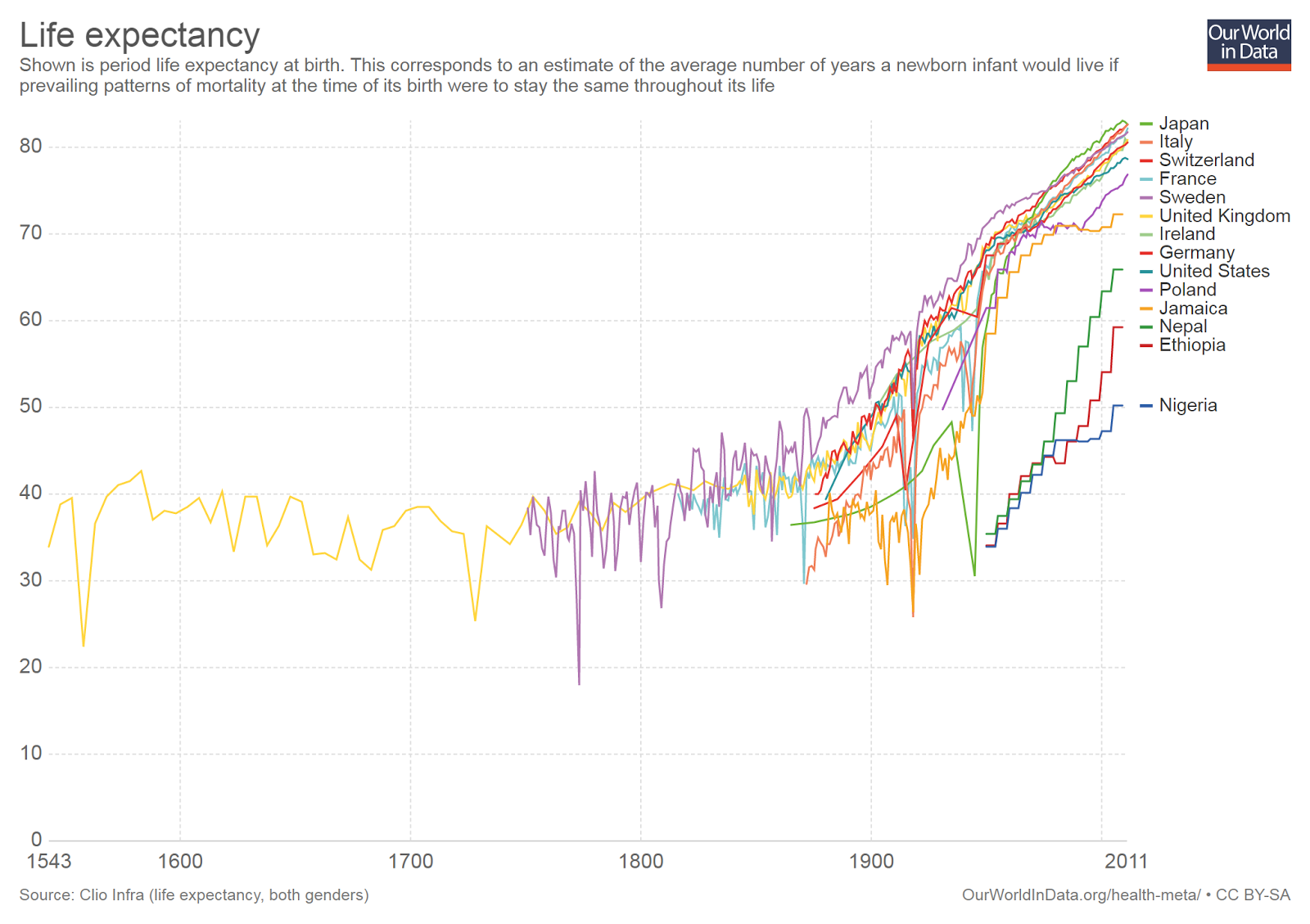
Fossil Fuels Have Dramatically Increased Life Expectancy


From World in Data

Historic Usage of Fossil Fuels


The above graphs are self explanatory and do not require an explanation. As a species we have become obsessed with "carbon emissions" and "clean power" but we have at the same time completely missed the bigger picture - which is that since humans discovered fossil fuels as a power source they have lived for longer than ever before. 

It doesn't mean that pollution is not an issue, it just means it needs to be seen within the larger context of the incredible contribution of fossil fuels to humanity.

Club of Rome - I will just leave this link here for those who want to dig a bit deeper.

Wednesday, 1 February 2017

Ireland the First Country to Divest from Fossil Fuels (Or Is It?)

The Irish government has passed a bill forcing the Ireland Strategic Investment Fund (ISIF) to divest from fossil fuel companies.  Apparently, we are the first country in the world to do so. 

When I checked the ISIF website, I couldnt find one company representing fossil fuels. I contacted ISIF on Monday but have yet to receive a response.  I also asked the TD responsible for the bill, Thomas Pringle, he said there were 132 companies including the Dakota pipeline company for a total of €133 million but that no list was available.

A document on the ISIF website states :
for example may include projects in sectors such as water, telecoms, broadband, energy (wind/other renewables/energy efficiency) and forestry. 

This document was published in July 2015, well before the recent bill about fossil fuels was enacted. So I'm still in the dark as to what exactly Ireland has divested from. 

The North Dakota pipeline is owned by Energy Transfer Partners which is an oil and gas company. However, one of their directors, Rick Perry, who was appointed as Secretary for Energy by President Trump, helped erect 11,000MW of wind energy during his term as Governor for Texas. So they are not exactly anti renewables. 

This fact neatly explains the futility of such a bill. If you installed 11,000MW of wind in Ireland, you would still need oil and gas. If you've stopped investing in oil and gas and bet everything on renewables, then the lights go out.  

With Ireland recently banning fracking, it looks like we will be completely dependent on others for reliable energy sources. Not exactly something to be proud of.