|
| Dates : 12th and 13th January, 2019 [Source SEM-O] |
Indeed, of the eleven different sources of renewable energy defined in the 2009 Directive, many are of a diffuse nature and more suited to being applied for heat energy rather than the generation of electricity. An example of this being the use of solar energy for water heating, which is a simple technology approach, such as circulating water through evacuated glass tubes.
Typical well-installed systems provide up to 60% of hot water demand over 12 months [SEAI].
The cost effectiveness of this approach can be determined from the fact that such installations were in use even before grants for their installation became available, as could also be said in relation to biomass (wood based) heating systems and aerothermal and geothermal systems for space heating.
If we consider a Waste to Energy (WtE) plant, the waste is combusted at a minimum temperature of 850 ⁰C producing in the boiler high pressure steam for electricity generation and hot water for use in district heating. Some 50% of the waste is of biogenic origin (biomass) and therefore 50% of energy produced is from a renewable source.
If we consider a Waste to Energy (WtE) plant, the waste is combusted at a minimum temperature of 850 ⁰C producing in the boiler high pressure steam for electricity generation and hot water for use in district heating. Some 50% of the waste is of biogenic origin (biomass) and therefore 50% of energy produced is from a renewable source.
If this waste had instead gone to landfill, the biogenic fraction would have rotted and produced methane, which is a global warming gas with a Global Warming Potential (GWP) of 28 – 36 over 100 years. In other words it is some 28 to 36 times more potent than carbon dioxide. While the landfill gas collection system would have captured some of this methane for combustion in gas engines, figures show that of the order of 40% is directly released to atmosphere. In a WtE plant, the heat and mass balance shows 810 kWh of electricity produced per tonne of Municipal Solid Waste (MSW) combusted with about 0.72 kg biogenic CO2 and 0.53 kg fossil CO2 per kWh of direct emissions.
In the same timeframe that a 2004 report by ESB was stating that utilising a low penetration of wind energy to reduce a tonne of carbon dioxide was €120, it was being reported that the cost to avoid 1 tonne of CO2 with WtE was about €43, whereas the costs to avoid 1 tonne of CO2 with (other) biomass was €80. Indeed, if district heating systems are used in addition to solely electrical outputs, then this WtE CO2 avoidance cost reduces to the range €7 to €20.
In the same timeframe that a 2004 report by ESB was stating that utilising a low penetration of wind energy to reduce a tonne of carbon dioxide was €120, it was being reported that the cost to avoid 1 tonne of CO2 with WtE was about €43, whereas the costs to avoid 1 tonne of CO2 with (other) biomass was €80. Indeed, if district heating systems are used in addition to solely electrical outputs, then this WtE CO2 avoidance cost reduces to the range €7 to €20.
It is therefore very difficult to reconcile these values with the claims made by many greens in Ireland, which are provided without any supporting evidence, that wind energy represents Ireland’s “cheapest renewable electricity resource”. But there is also evidence that increasing amounts of wind energy is discriminating against other forms of renewable energy.
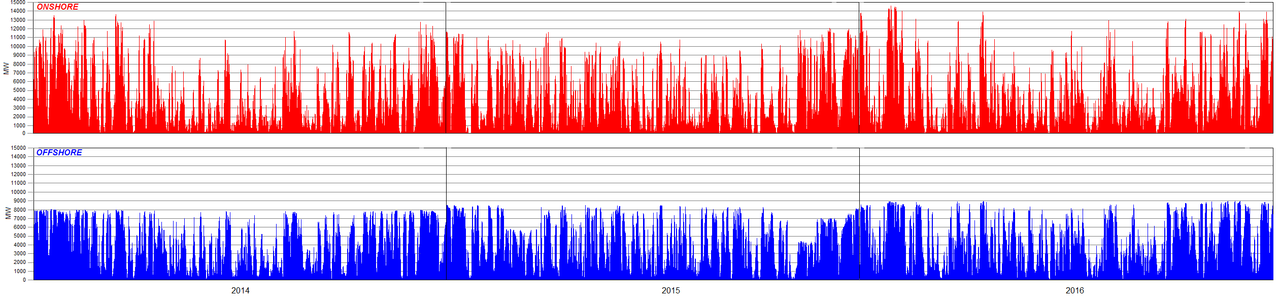
The figure at the top of this article shows the relevant capacity factors for wind energy in Ireland and a Waste to Energy plant in Co. Meath over two days in January 2019. This facility treats some 200,000 tonnes of MSW per annum, with an electricity output of 18 MW, which was until recently a continuous output, with over 50% being classified as renewable. Outside of a short annual maintenance period this output is continuous so the WtE developer could in this case justifiably claim that this 18 MW is “enough to power more than 22,000 homes”
Yet there was so much wind energy on the grid on the 12th and 13th January that other generators had to be taken off line and kept on hot standby ready to ramp up, when the inevitable happened and the wind dropped. This can be clearly seen in the graph, where the WtE plant had to be taken off the grid for extended periods. However, such a waste to energy plant can’t be simply throttled back, the waste is still arriving and the furnace temperature has to be kept at a minimum of 850 ⁰C. Instead the steam generated simply has to be dumped into the plant’s cooling system rather than be used to generate steam. Not only is this a loss of revenue to the WtE operator, but it is reflected in resulting higher costs for waste disposal of those using that facility.
It could be argued that discrimination is occurring, in that renewable energy produced at the WtE plant, in a far more reliable and cost effective manner, now has to be dumped to facilitate ever more wind energy being placed on the grid. Wind energy, which by its highly variable and intermittent nature is deeply flawed for the production of significant amounts of electricity. Indeed, as is shown above, this wind output basically isn’t there when it is needed for days on end and then it floods the grid for a short period with high inputs. This can only be managed by discriminating against other users, including those which are lower cost and more reliable renewable inputs. It is also fair to say that this is what you get, when you allow a ‘wild west’ of wind farm developments, without any analysis, without any assessments or without any of the legally required rules to ensure that authorisation is transparent, proportionate and does not discriminate between individual renewable technologies.
Reference WtE cost €43 per MW to avoid 1 tonne of CO2 :
https://www.powerengineeringint.com/articles/print/volume-15/issue-5/features/waste-to-energy-energy-no-time-to-waste.html