Showing posts with label Oil generation. Show all posts

Saturday, 22 April 2017

Emissions Rise at Ireland's Power Stations Despite €6 Billion Investment in Wind Energy

One of the things consistently pointed out on this blog is that no matter how much wind energy you deploy, you can never shutdown a single power station. Those who advocate for more wind are slowly realizing this as more facts come out. 

Last year (2016), electricity demand in Ireland rose by about 2.3%.  An additional 600MW of wind was added to the system but the capacity factor (a measure of the annual output from wind farms) fell from 33% to 27%. Also during 2016 the limit on the amount of wind allowed into the system at any one time (non synchronous penetration) was raised from 50% to 55% and then at the end of the year to 60%. 

According to reports by the EPA, emissions and fuel consumption increased in eight out of the eleven power stations for which records were available for 2016. 

Six of these power stations were operated by gas, the other three by oil. Poolbeg (gas), Tarbert (oil) and North Wall (gas) power stations had the largest rises in emissions. Aghada (gas) and Tarbert (oil) power stations had the highest emissions since 2011, while Rhode power station (oil) had the highest since 2007.


Power station
Emissions Increase 2016 Vs 2015
Highest Emissions Since
Fuel Type
Aghada
72%
2011
Gas
Huntstown 2
19%
2013
Gas
Poolbeg
366%
2014
Gas
North Wall
249%
2013
Gas
Great Island
61%
Commissioned in 2015
Gas
Tynagh
70%
2014
Gas
Tawnaghmore
14%
2010
Light Fuel Oil
Tarbert
240%
2011
Heavy Fuel Oil / Light Fuel Oil
Rhode
93%
2007
Light Fuel Oil

Note the three oil run power stations at the bottom all had the highest emissions for many years.

Factors that lead to these increases were :

• The interconnector to the UK was out for four months at the end of 2016. This would partly explain the increases in Dublin power stations such as Poolbeg and North Wall.

• Electricity demand increasing by 2.3%. With new data centres on the way, demand will soon increase by much more than that. 

• Capacity Factor of wind dropping from 33% to 27%. It's an unfortunate fact that no matter how many wind farms there are, if there is no wind, you get no energy. Storage wont fix this problem either as the original energy source is still intermittent wind energy that can remain flat for months on end during periods of high pressure.

• The low price of oil and gas. 

• The low capacity credit of wind energy. Ireland now has 3,000MW of wind, but all these wind turbines cannot replace a single power station. All the power stations must remain on standby. An additional 600MW of wind was added in 2016, roughly a 25% increase on 2015. The only solution for this is nuclear. A nuclear power station can fully replace an existing power station and hence achieves much greater and much more consistent fuel and emissions savings in the long run than wind ever can.

How ironic that Ireland is now dependent on oil again for it's electricity needs after spending close to €6 billion on wind technology and another billion or two on grid upgrades to accommodate this wind. If this is not an indictment of the wind program, then I don't know what is.

Sources :

1) EPA Environmental Reports

http://www.epa.ie/terminalfour/ippc/index.jsp

2) Eirgrid Renewable Energy Curtailment Report 2016

http://www.eirgridgroup.com/site-files/library/EirGrid/Annual-Renewable-Constraint-and-Curtailment-Report-2016-v1.0.pdf

3) Cost of wind is estimated to be €2 million per MW installed.  


Sunday, 8 November 2015

The Modern Economics of Electricity Generation - UK, A Case Study

Hundreds of millions of pounds worth of subsidies will be handed to highly polluting diesel-fuelled electricity generators, under plans to preventpower shortages over the next few years.Companies have registered to provide 4,000 megawatts of standby power under a government auction scheme designed to help the UK cope with the intermittent nature of wind and solar energy - The Times, November 2015.

In an article written by Irish Energy Blog last June, it was stated that: (The economics of electricity generation)

 So now, we enter into a new era of electricity generation economics where subsidies are required to maintain all generators, not just the renewables. 

This is precisely what is now happening in the UK. Due to the fact that they have invested heavily in non dispatchable renewable generation, they are facing a shortage in dispatchable generation - that is, generation available on demand. The quickest solution to this problem is to use diesel generators. But these diesel generators will be running intermittently and would not be economically viable.  So the UK National Grid will pay subsidies to diesel generator owners to maintain their capacity available on standby.

A similar situation is happening in Ireland where DSUs (demand side units) get paid capacity payments. There is now 160MW of these diesel generators in Ireland.

Had UK invested in dispatchable plant, like CCGT gas plants, they would now be using cheaper and cleaner more efficient forms of generation instead of diesel. Unintended consequences of the Green Energy Rush are now hitting home.

Saturday, 23 May 2015

Emissions rise during March with increased use of oil generation as back up


Admin Note - There are a lot of diagrams in this blogpost once again but I believe they tell an interesting story so please bear with me. Apologies if you experience formatting problems - these are not intentional !


However, it is an unfortunate fact that the contribution to adequacy of additional amounts of wind decreases progressively and tends towards zero [ESB 2004]. 

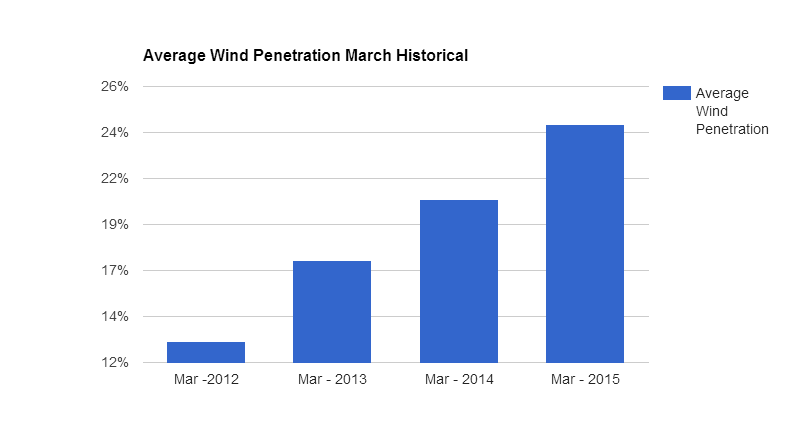
Diagram 1 - All Ireland average wind penetration levels (Eirgrid)


We can see from the above diagram that average wind penetration for the month of March has nearly doubled since 2012. Let's see what impact this has had on the running of our electricity system. 

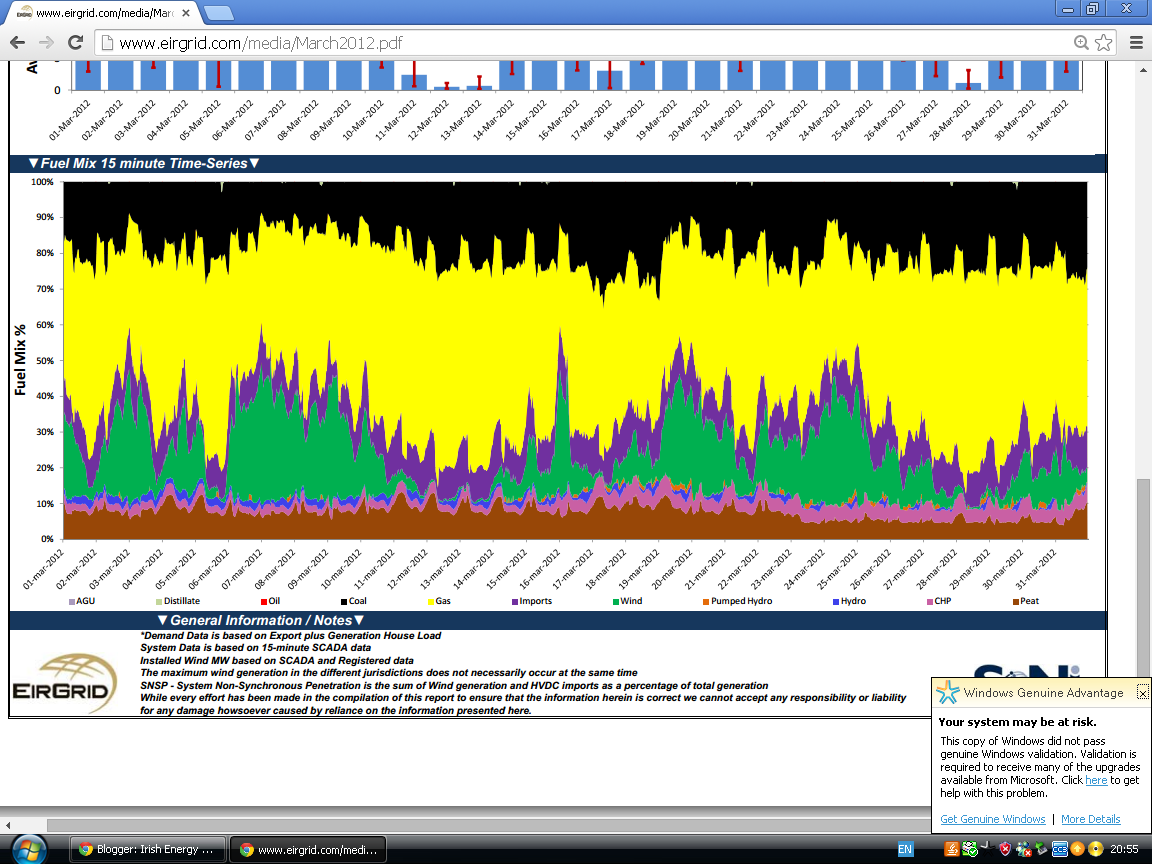
Diagram 2: Fuel Mix March 2012 (wind penetration 13%)


Diagram 2 shows the fuel mix for March 2012. Black represents coal, gas is yellow and green is wind. 
Gas is acting as back up to the intermittent wind. Given Ireland's generation capacity, this is the most 
efficient and cleanest form of back up. Hardly any oil generation was used.


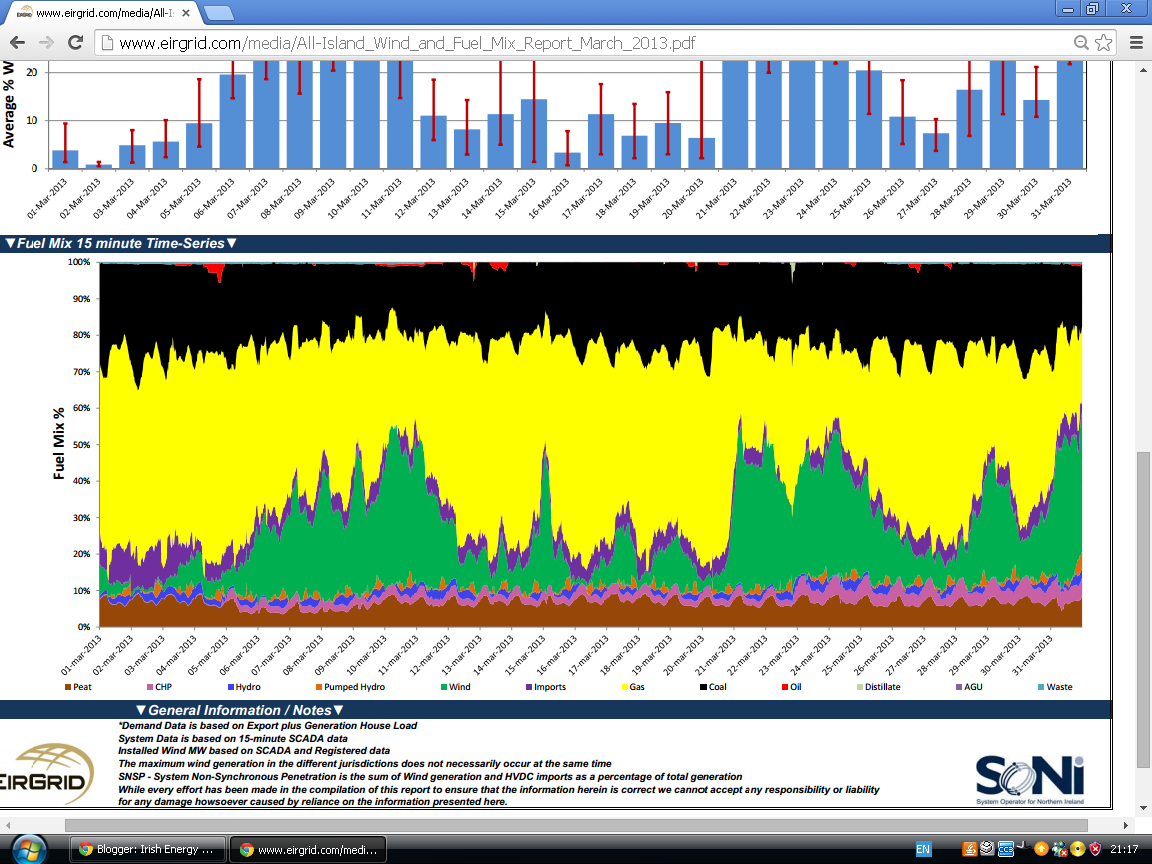
Diagram 3 - Fuel Mix March 2013 (wind penetration 17%)

Diagram 3 shows a similar fuel mix as 2012 but with some oil generation (red shading at top)


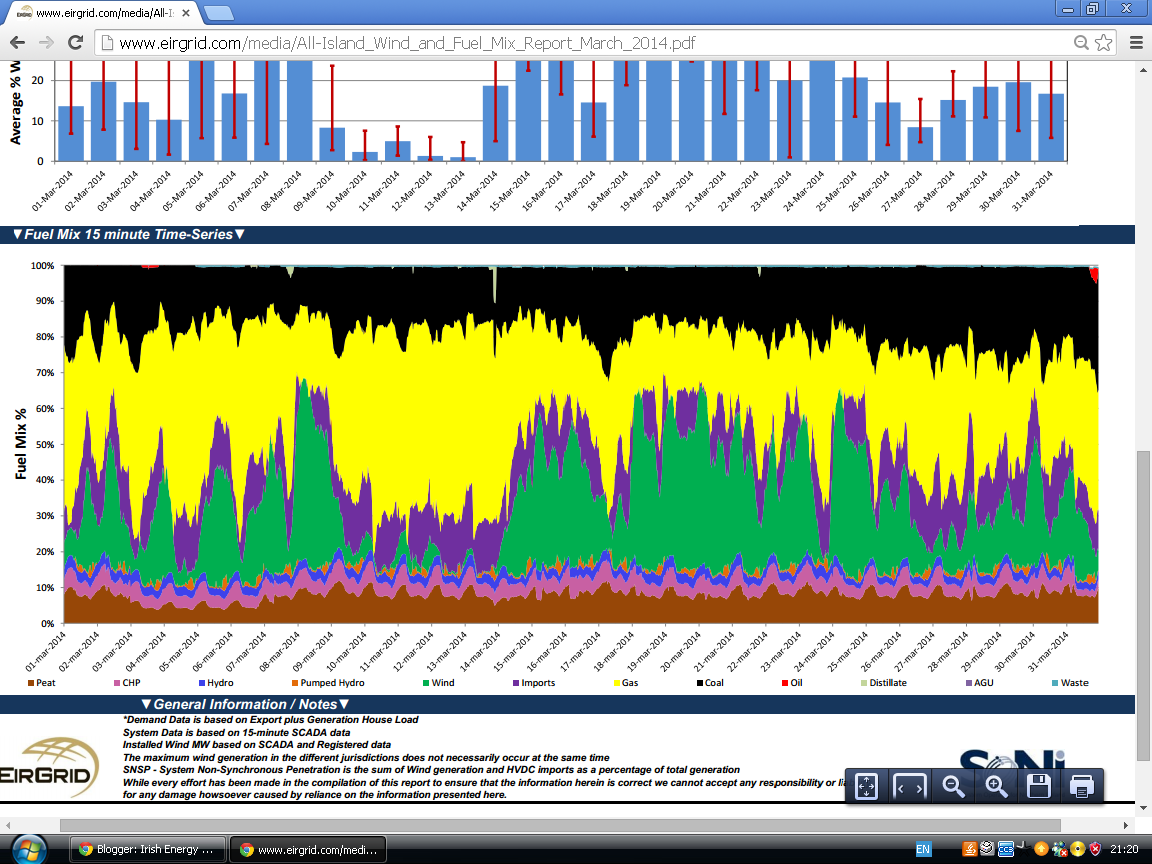
Diagram 4: Fuel Mix 2014 (wind penetration 21%)

Diagram 4 again shows a similar fuel mix for 2014 but with small amounts of distillate 
(i.e. diesel) oil generation (light green shading at top) and heavy fuel oil (red).

Now we come to March 2015:


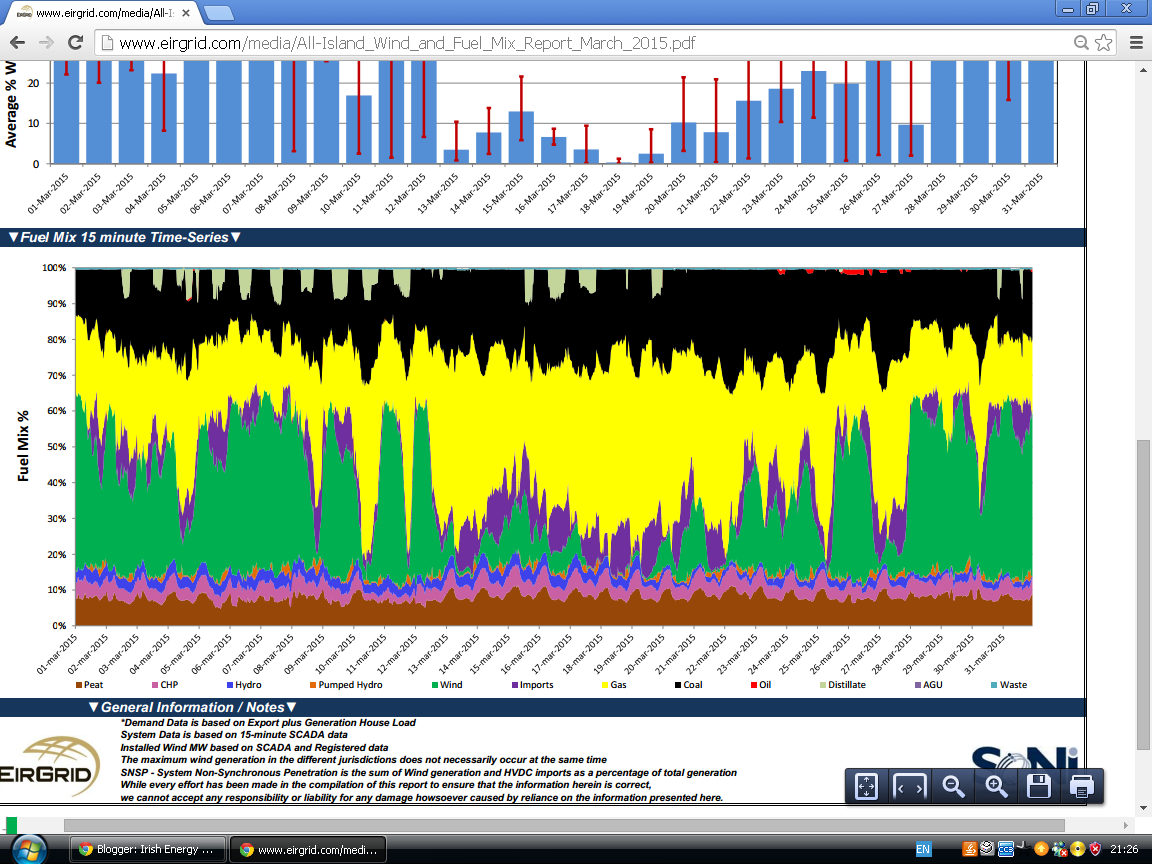
Diagram 5: Fuel Mix 2015 (wind penetration 24%)

You probably have noted that gas generation has become comparatively less and less 
each year as wind penetration increases. But what we see now in 2015, with average and 
maximum wind penetrations of 24% and 61% respectively, is significantly more distillate and 
conventional oil generation. This meant that emissions from conventional generators 
increased as "dirtier" inefficient oil replaced "cleaner" more efficient gas generation. 
Why did this happen ? Well, if we take a look at forecast and actual wind generation 
for a period in March 2015 it will give us a clue :


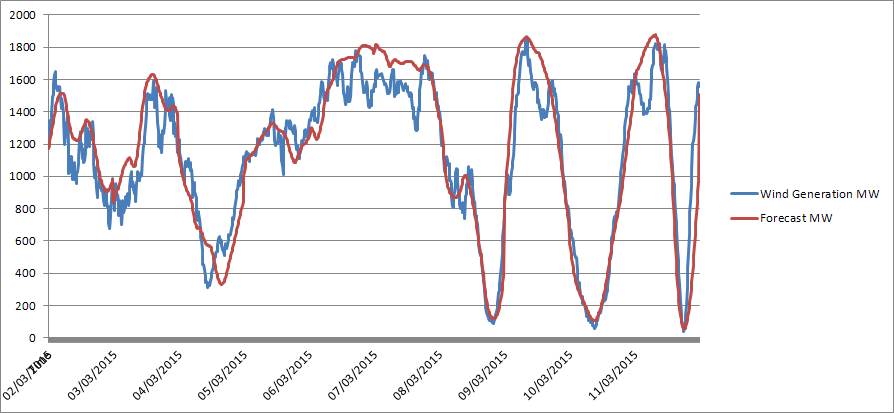
Diagram 6: Wind forecast and generation March 2015

The intermittent nature of wind is evident in Diagram 6. The red line shows forecast wind and 
it is clear that actual wind (blue line) failed to meet forecast wind on numerous occasions 
during this period.

Oil generators have a unique characteristic in that they are very fast acting, in Ireland it 
typically take eight minutes for them to reach full capacity, compared to say a gas generator 
which can take up to eight hours to start. But there is a trade off - oil produces more emissions 
due to its energy dense nature while gas, once the generator is up and running, produces about 
30% less nitrogen oxide and carbon dioxide than oil. Gas plants are also much more efficient 
in terms of fuel consumption. So what has happened is that fast acting oil generators are 
stepping in to meet loss of supply due to unforeseen drops in wind power.

If we take a system with lower levels of wind penetration, like in 2012 / 13, we can see that 
gas generators can cope with these wind levels as sudden loss in supply from wind generators does 
not cause a major problem to the system. But we can see in Diagram 6 losses in wind generation 
of up to 400MW, which is akin to the loss of the largest power plant in Ireland. One might ask, 
but surely, there is reserve there for such a loss of power - well there is, but in my opinion, 
this would be reserved for the loss of a power plant rather than loss of wind power.

The conclusion from this is that the system can cope with wind penetration of circa 20% but as 
you go above this level, the benefits from wind energy diminish, as you have to back it up with 
fast acting higher emitting plant. I have long believed that we have reached saturation 
point with wind energy and this data confirms this. It is clear that an all wind strategy does 
not make sense.

While nuclear should be an option but requires a long term plan of itself, there is a simpler 
solution, that does not require back up oil plants, new pylon infrastructure or a new expensive 
Grid Code to accommodate high levels of unstable wind energy, to meeting our renewable 
targets - biomass. 

The below presentation gives a good summary of the benefits of this option :


While wind provides non dispatchable generation (incapable of been switched on when 
required), biomass provides dispatchable generation (can be switched on as required). 
This means that biomass generation can replace an existing power station (eg Moneypoint 
coal power station) and utilize existing grid structure. 

________________________________________________________________________
Other Data

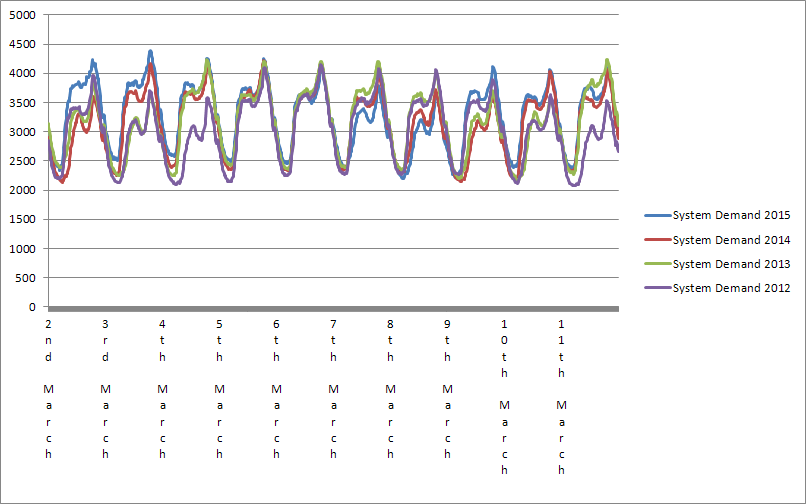
For completeness sake, the below diagram shows March demand for the years 2012  - 2015. 
You can see that there was a couple of days where peak demand was higher in 2015 
(and also lower) but in general, demand was roughly the same and therefore does not 
account for the increased use of oil generation. 


Thursday, 29 January 2015

More on the Energy Bubble


Figure 1: How generating capacity has increased since 2006. East West Interconnector included in 2013 and 2014, also Great Island CCGT included in 2014 and retired oil plant on same site taken out


The above graph, Figure 1, shows the levels of electricity generation capacity for the Republic of Ireland at the end of 2014. We are now approaching the 10 GW mark, the highest ever in the State. If you really want to know why your electricity bills are so high then you only need to look no further than the above graph. All the above power stations and wind farms have to be financed through our bills, even though we only use on average less than a third, and at peak times less than half, of this capacity in electricity. The key to understanding this graph is looking at the gap between the blue (average demand) and black line (total capacity including wind) and the red (peak demand) and black line in 2006 and then comparing this gap with the current gap in 2014 (See Figure 2). As you can see, it has gone out of control. Consider that back in 2006, when the economy was booming, there were no blackouts . The level of back up capacity was sufficient but now that we have over 2GW of wind, it appears that more back up capacity is required to maintain a stable and reliable system.


2006
2014
Total Capacity
/ Average Demand
2.0 times
3.2 times
Total Capacity
/ Peak Demand
1.3 times
2.0 times
Figure 2: Total Capacity is now over 3 times that of average demand and double that of peak demand

There is an argument put forward by the Greens that this excess capacity will be required when everyone switches over to electric cars and electric heating systems as this will lead to a surge in average and peak demand. But there is a major flaw in this argument. You would still need enough dispatchable plant (i.e. plant that can be switched on and off at the touch of a button rather than when the wind blows) at least equal to the peak demand under this scenario, no matter how many wind farms there are. Otherwise, what would everyone do on a calm day like the 11th October 2014 ? Cycle the 10 or 20 miles or more to work ? Or perhaps wear extra woolly jumpers ? So you would still need to build more power stations to cover the surge in demand under this scenario and wind turbines would still result in excess capacity just like in the above graph.

Fuel Mix 2013 - another historic milestone


Figure 3: Fuel Mix 2013 with UK imports broken down into original fuel sources

Figure 3 shows that in 2013, Ireland used nuclear power for the first time. 2% of the electrons going into your electric socket in 2013 came from nuclear stations in the UK. I have broken down the power consumed here through UK imports into their energy sources and added that to the fuel mix provided by SEAI to arrive at the above chart. UK coal power accounted for 40% of our imports with gas at 25% and nuclear at 21%. The 10GW or so of UK wind provided just 6% of imports. So we are still very reliant on gas and coal power - almost 70% of the electrons entering your home in 2013 came from gas and coal power. (not including spinning reserves or back up generation)

But when we look at SEAI's original chart it tells an interesting story :

Figure 4: SEAI Fuel Mix 2013


While on the face of it, wind power did well, one has to put the output of a generator in the context of its generating capacity. The following table (Figure 5) shows the share of generating capacity each energy source had in 2013, so for example, gas plants made up 44% of the entire power plant and wind farm fleet in 2013.


Ireland's Power Generation Mix
2013
Gas
44%
Wind
20%
Coal
9.5%
Peat
4%
Interconnection
5.5%
Oil
12%
Hydro
2%
Pumped
3%
Figure 5: Generating mix 2013

Definitions used :

Grid Acceptance Rate (GAR): the rate at which when power becomes available from a generating source that it is accepted by the grid. So wind power has a grid acceptance rate of 1:1 because it has priority dispatch, meaning when wind power is available it is automatically taken by the grid. Gas has a GAR of between 1:0.8 - 0.9 because when wind becomes available it pushes gas off the grid. I will assume 1:0.85 for this analysis. Coal and Peat are assumed to have a GAR of 1:0.95 as they are occasionally pushed off by wind

Fuel / Capacity Ratio : the position of a fuel source in the fuel mix relative to its position in the generating capacity mix. So a fuel source that makes up 50% of the capacity and 50% of the fuel mix will have a fuel / capacity ratio of 1:1.

Gas power gave just over 1MW power for 1MW share of capacity so had a fuel / capacity ratio of 1:1. Peat gave over twice as much power as capacity (2:1) while coal gave approx 1.6MW power for 1MW capacity (1.6:1). It is no surprise that the highest emitting power sources produced the most power relative to their size. This is because coal and peat store higher concentrations of energy than other fuel sources having formed over millions of years. Oil power, representing 12% of capacity, had a negative fuel / capacity ratio because these plants were lying idle most of the time. Oil plant are mostly used for "peaking" , i.e. when peak demand goes above normal which doesn't happen very often nowadays. So it had a significantly low Grid Acceptance Rate (somewhere around 1:0.01), whereas gas, peat and coal had GARs very close to 1:1 (between 1:0.85-0.95)


So how did wind do? Well, it had a negative output relative to its share of capacity. It comes out at 0.8MW of power for each share of MW installed. This is despite it having priority dispatch i.e. when the wind blows, the power is taken straight away by the grid. So levels of other power sources - mostly gas, and sometimes coal and peat - are reduced when wind is available. Applying the above definitions, this means that wind had the best Grid Acceptance Rate of all fuel sources i.e 1:1, but had a negative fuel / capacity ratio of 0.8:1. So wind and oil came out the worst, but oil had the lowest Grid Acceptance Rate, whereas wind had the highest. What this shows is that wind is a poor storage of energy when compared to coal, gas, peat and oil and storage solutions cannot solve this problem, rather it simply transfers the storage of this energy from one hour to another. What is required is a renewable source that contains higher concentrations of energy


And herein lies the problem with wind energy - you can't run a reliable grid if you install power plants that almost always give a negative fuel / capacity ratio. If you install 1,000 MW of wind, and demand hits 1,000MW, the power from the wind will almost always be less than 1,000MW so you have a blackout. This problem means that wind energy can never replace conventional plant and so competitiveness goes out the window